
Chemical composition of anti-microbially active fractions derived from extract of filamentous fungus Keratinophyton Lemmensii including three novel bioactive compounds
Roman Labuda, Markus Bacher, Thomas Rosenau, Hannes Gratzl, Maria Doppler, Sonja Hager, Doris Marko, Christoph Wiesner, Monika Očková, Nicole Ollinger, Martin Wagner, Christoph Schüller, Joseph Strauss
10.2024
Nature scientific reports
Screening for new bioactive microbial metabolites, we found a novel okaramine derivative, for which we propose the trivial name lemmokaramine, as well as two already known okaramine congeners – okaramine H and okaramine J – responsible for antimicrobial activity of the recently described microscopic filamentous fungus, Keratinophyton lemmensii BiMM-F76 (= CCF 6359). In addition, two novel substances, a new cyclohexyl denominated lemmensihexol and a new tetrahydroxypyrane denominated lemmensipyrane, were purified and characterized. The compounds were isolated from the culture extract of the fungus grown on modified yeast extract sucrose medium by means of flash chromatography followed by preparative HPLC. The chemical structures were elucidated by NMR and LC-MS. The new okaramine (lemmokaramine) exerted antimicrobial activity against Gram-positive and Gram-negative bacteria, yeasts and fungi and anticancer activity against different mammalian cell lines (Caco-2, HCT116, HT29, SW480, MCM G1, and MCM DLN). Furthermore, we found a significant antioxidant effect of lemmokaramine following H2O2 treatment indicated by activation of the Nrf2 pathway. This is the first report describing analysis and structural elucidation of bioactive metabolites for the onygenalean genus Keratinophyton.
Two novel members of Onygenales, Keratinophyton kautmanovae and K. keniense spp. nov. from soil
E. Möstl, R. Beyer, F. Yaldez, C. Schüller, J. Strauss and R. Palme
07.2024
Nature scientific reports
Two new Keratinophyton species, K. kautmanovae sp. nov. and K. keniense sp. nov., isolated from soil samples originating from two different geographical and environmental locations (Africa and Europe) are described and illustrated. Phylogenetically informative sequences obtained from the internal transcribed spacer (ITS) region and the nuclear large subunit (LSU) rDNA, as well as their unique phenotype, fully support novelty of these two fungi for this genus. Based on ITS and LSU combined phylogeny, both taxa are resolved in a cluster with eight accepted species, including K. alvearium, K. chongqingense, K. hubeiense, K. durum, K. lemmensii, K. siglerae, K. submersum, and K. sichuanense. The new taxon, K. kautmanovae, is characterized by clavate, smooth to coarsely verrucose conidia, absence of arthroconidia, slow growth at 25 °C, and no growth at 30 °C, while K. keniense is morphologically unique with a high diversity of conidial shapes (clavate, filiform, globose, cymbiform and rhomboid). Both species are described based on their asexual, a chrysosporium-like morph. While the majority of hitherto described Keratinophyton taxa came from Europe, India and China, the new species K. keniense represents the first reported taxonomic novelty for this genus from Africa.
Androgens and their metabolites in faeces of non-pregnant and pregnant cows and sows
E. Möstl1, R. Beyer, F. Yaldez, C. Schüller, J. Strauss and R. Palme
12.2023
Wiener Tierarztliche Monatsschrift. 12/2023
The gonads, the adrenals and in many mammal species also the pla- centa produce steroid hormones. The production and function of gesta- gens and oestrogens are well docu- mented but less is known about an- drogens in females, where they are often considered as mere precursors of oestrogens. We believe that substantial amounts of various androgens of placental origin may be present in the faeces. To test this notion, we evaluated and characterized faecal androgens/metabolites in sows and cows during oestrus and at different stages of pregnancy. We took fae- cal samples from eight sows and six cows on the day of oestrus and 16 days later as well as from eight preg- nant sows on day 110 of gestation, from ten cows on day 150 of ges- tation and from eight cows on day 240 of gestation. We used enzyme immunoassays to measure the con- centrations of aetiocholanolone (Et) and epiandrosterone (Ep) as repre- sentatives of the 5ß- and 5α-17-oxo- androstanes and of testosterone (T) and 5ß-dihydrotestosterone (5ß-DHT) as representatives of the 17ß-hydroxyan- drostanes. We measured the concentration of recep- tor-active androgenic substances (expressed as tes- tosterone equivalents) using an androgen receptor assay. We used reversed-phase high performance liquid chromatography (RP-HPLC) immunograms to characterize the immunoreactive substances. Immunoreactive and receptor-active androgens and androgen metabolites were present in all samples, with higher amounts in cows than in sows. The immu- nograms showed that only unconjugated steroids were present in the faeces. All C19-steroid concentrations increased significantly towards term, indicating that the placenta produces these steroids or their precur- sors. During the end of pregnancy, the prevailing me- tabolites in cows cross-react with the Et assay; those in sows react with the Ep assay. Near the end of ges- tation, there was a distinct increase of the receptor-ac- tive androgens. In pregnant sows, the concentration of receptor-active androgens was higher than the re- sults of the immunoassay but the increase close to the end of gestation was not as pronounced as in cows. In cows, the androgen receptor assay showed signifi- cantly higher concentrations than the testosterone im- munoassay on days 0, 16 and 240 but not on day 150, whereas the concentrations in faecal samples of sows were significantly higher only on day 16. The difference in the concentrations measured by the two assays may be a hint that androgenic substances other than T and 5α-DHT are present in the faeces, especially in cows. Our results show that high concentrations of C19- steroids are excreted in the faeces of pregnant cows and sows. We conclude that the placenta is the main source of these molecules, especially in the later peri- ods of gestation.
Induction of Aspergillus fumigatus zinc cluster transcription factor OdrA/Mdu2 provides combined cellular responses for oxidative stress protection and multiple antifungal drug resistance.
Sasse C, Bastakis E, Bakti F, Höfer AM, Zangl I, Schüller C, Köhler AM, Gerke J, Krappmann S, Finkernagel F, Harting R, Strauss J, Heimel K, Braus GH.
11.2023
mBio. 2023 Nov 20;14(6):e0262823. doi: 10.1128/mbio.02628-23. Online ahead of print. PMID: 37982619
Oxidative stress-inducing substances like amphotericin B and menadione promote OdrA/Mdu2 accumulation in the nucleus to regulate stress response genes like mdr1 and the putative glutathione-S-transferase encoding gene gstD. The expression levels and external stress conditions fostering nuclear accumulation of OdrA/Mdu2 determine the regulation of the target genes. Hence, OdrA/Mdu2 provides a combined adaptation strategy for survival in nature or within a potential host, where this fungus represents the most common agent for human mold pneumonia worldwide. The OdrA/Mdu2 controlled genetic network highlights the tight connection between oxidative stress response and antifungal drug adaption to secure A. fumigatus survival in various hostile environments.
Global analysis of putative phospholipases in Plasmodium falciparum reveals an essential role of the phosphoinositide-specific phospholipase C in parasite maturation.
Burda PC, Ramaprasad A, Bielfeld S, Pietsch E, Woitalla A, Söhnchen C, Singh MN, Strauss J, Sait A, Collinson LM, Schwudke D, Blackman MJ, Gilberger TW.
07.2023
mBio. 2023 Aug 31;14(4):e0141323. doi: 10.1128/mbio.01413-23. Epub 2023 Jul 25. PMID: 37489900; PMCID: PMC10470789.
For its replication within red blood cells, the malaria parasite depends on a highly active and regulated lipid metabolism. Enzymes involved in lipid metabolic processes such as phospholipases are, therefore, potential drug targets. Here, using reverse genetics approaches, we show that only 1 out of the 19 putative phospholipases expressed in asexual blood stages of Plasmodium falciparum is essential for proliferation in vitro, pointing toward a high level of redundancy among members of this enzyme family. Using conditional mislocalization and gene disruption techniques, we show that this essential phosphoinositide-specific phospholipase C (PI-PLC, PF3D7_1013500) has a previously unrecognized essential role during intracellular parasite maturation, long before its previously perceived role in parasite egress and invasion. Subsequent lipidomic analysis suggests that PI-PLC mediates cleavage of phosphatidylinositol bisphosphate (PIP2) in schizont-stage parasites, underlining its critical role in regulating phosphoinositide levels in the parasite.
Genome analysis of Cephalotrichum gorgonifer and identification of the biosynthetic pathway for rasfonin, an inhibitor of KRAS dependent cancer.
Schüller A, Studt-Reinhold L, Berger H, Silvestrini L, Labuda R, Güldener U, Gorfer M, Bacher M, Doppler M, Gasparotto E, Gattesco A, Sulyok M, Strauss J.
06.2023
Fungal Biol Biotechnol. 2023 Jun 24;10(1):13. doi: 10.1186/s40694-023-00158-x. PMID: 37355668; PMCID: PMC10290801.
This study identified a biosynthetic gene cluster containing a key-gene responsible for rasfonin production. Additionally, molecular tools were established for the non-model fungus Cephalotrichum gorgonifer which allows strain engineering and heterologous expression of the BGC for high rasfonin producing strains and the biosynthesis of rasfonin derivates for diverse applications.
⇒ https://fungalbiolbiotech.biomedcentral.com/articles/10.1186/s40694-023-00158-x
Limosilactobacillus fermentum Limits Candida glabrata Growth by Ergosterol Depletion.
Zangl I, Beyer R, Gattesco A, Labuda R, Pap IJ, Strauss J, Schüller C.
Microbiol Spectr. 2023 Feb 21;11(2):e0332622. doi: 10.1128/spectrum.03326-22. Epub ahead of print. PMID: 36802215; PMCID: PMC10100998.
02.2023
Candida glabrata is a human-associated opportunistic fungal pathogen. It shares its niche with Lactobacillus spp. in the gastrointestinal and vaginal tract. In fact, Lactobacillus species are thought to competitively prevent Candida overgrowth. We investigated the molecular aspects of this antifungal effect by analyzing the interaction of C. glabrata strains with Limosilactobacillus fermentum. From a collection of clinical C. glabrata isolates, we identified strains with different sensitivities to L. fermentum in coculture. We analyzed the variation of their expression pattern to isolate the specific response to L. fermentum. C. glabrata-L. fermentum coculture induced genes associated with ergosterol biosynthesis, weak acid stress, and drug/chemical stress. L. fermentum coculture depleted C. glabrata ergosterol. The reduction of ergosterol was dependent on the Lactobacillus species, even in coculture with different Candida species. We found a similar ergosterol-depleting effect with other lactobacillus strains (Lactobacillus crispatus and Lactobacillus rhamosus) on Candida albicans, Candida tropicalis, and Candida krusei. The addition of ergosterol improved C. glabrata growth in the coculture. Blocking ergosterol synthesis with fluconazole increased the susceptibility against L. fermentum, which was again mitigated by the addition of ergosterol. In accordance, a C. glabrata Δerg11 mutant, defective in ergosterol biosynthesis, was highly sensitive to L. fermentum. In conclusion, our analysis indicates an unexpected direct function of ergosterol for C. glabrata proliferation in coculture with L. fermentum.
New regulation hub for the production of fungal bioactive substances identified
by Betim Karahoda , Lakhansing Pardeshi, Mevlut Ulas, Zhiqiang Dong, Niranjan Shirgaonkar, Shuhui Guo, Fang Wang, Kaeling Tan, Özlem Sarikaya-Bayram, Ingo Bauer, Paul Dowling, Alastair B Fleming, Brandon T Pfannenstiel, Dianiris Luciano-Rosario, Harald Berger, Stefan Graessle, Mohamed M Alhussain, Joseph Strauss, Nancy P Keller, Koon Ho Wong, Özgür Bayram
09.2022
The KdmB-EcoA-RpdA-SntB chromatin complex binds regulatory genes and coordinates fungal development with mycotoxin synthesis.
Chromatin complexes control a vast number of epigenetic developmental processes. Filamentous fungi present an important clade of microbes with poor understanding of underlying epigenetic mechanisms. Here, we describe a chromatin binding complex in the fungus Aspergillus nidulans composing of a H3K4 histone demethylase KdmB, a cohesin acetyltransferase (EcoA), a histone deacetylase (RpdA) and a histone reader/E3 ligase protein (SntB). In vitro and in vivo evidence demonstrate that this KERS complex is assembled from the EcoA-KdmB and SntB-RpdA heterodimers. KdmB and SntB play opposing roles in regulating the cellular levels and stability of EcoA, as KdmB prevents SntB-mediated degradation of EcoA. The KERS complex is recruited to transcription initiation start sites at active core promoters exerting promoter-specific transcriptional effects. Interestingly, deletion of any one of the KERS subunits results in a common negative effect on morphogenesis and production of secondary metabolites, molecules important for niche securement in filamentous fungi. Consequently, the entire mycotoxin sterigmatocystin gene cluster is downregulated and asexual development is reduced in the four KERS mutants. The elucidation of the recruitment of epigenetic regulators to chromatin via the KERS complex provides the first mechanistic, chromatin-based understanding of how development is connected with small molecule synthesis in fungi.
RimO (SrrB) is required for carbon starvation signaling and production of secondary metabolites in Aspergillus nidulans
by Franz Zehetbauer , Angelika Seidl, Harald Berger, Michael Sulyok, Florian Kastner, Joseph Strauss
09.2022
We dig into the genetic network that transmits an external starvation signal to the cell inside leading to the production of a cancerogenic mycotoxin.
Depending on the prevailing environmental, developmental and nutritional conditions, fungi activate biosynthetic gene clusters (BGCs) to produce condition-specific secondary metabolites (SMs). For activation, global chromatin-based de-repression must be integrated with pathway-specific induction signals. Here we describe a new global regulator needed to activate starvation-induced SMs. In our transcriptome dataset, we found locus AN7572 strongly transcribed solely under conditions of starvation-induced SM production. The predicted AN7572 protein is most similar to the stress and nutritional regulator Rim15 of Saccharomyces cerevisiae, and to STK-12 of Neurospora crassa. Based on this similarity and on stress and nutritional response phenotypes of A. nidulans knock-out and overexpression strains, AN7572 is designated rimO. In relation to SM production, we found that RimO is required for the activation of starvation-induced BGCs, including the sterigmatocystin (ST) gene cluster. Here, RimO regulates the pathway-specific transcription factor AflR both at the transcriptional and post-translational level. At the transcriptional level, RimO mediates aflR induction following carbon starvation and at the post-translational level, RimO is required for nuclear accumulation of the AflR protein. Genome-wide transcriptional profiling showed that cells lacking rimO fail to adapt to carbon starvation that, in the wild type, leads to down-regulation of genes involved in basic metabolism, membrane biogenesis and growth. Consistently, strains overexpressing rimO are more resistant to oxidative and osmotic stress, largely insensitive to glucose repression and strongly overproduce several SMs. Our data indicate that RimO is a positive regulator within the SM and stress response network, but this requires nutrient depletion that triggers both, rimO gene transcription and activation of the RimO protein.
How to Completely Squeeze a Fungus – Advanced Genome Mining Tools for Novel Bioactive Substances
by Andreas Schüller, Lena Studt-Reinhold and Joseph Strauss
08.2022
We are happy to see the quite big review out now in „Pharmaceutics“, in which we reviewed and summarized the literature and our own contributions on old and new methods to mine the hidden treasures of fungal secondary metabolites.
Fungal species have the capability of producing an overwhelming diversity of bioactive substances that can have beneficial but also detrimental effects on human health. These so-called secondary metabolites naturally serve as antimicrobial “weapon systems”, signaling molecules or developmental effectors for fungi and hence are produced only under very specific environmental conditions or stages in their life cycle. However, as these complex conditions are difficult or even impossible to mimic in laboratory settings, only a small fraction of the true chemical diversity of fungi is known so far. This also implies that a large space for potentially new pharmaceuticals remains unexplored. We here present an overview on current developments in advanced methods that can be used to explore this chemical space. We focus on genetic and genomic methods, how to detect genes that harbor the blueprints for the production of these compounds (i.e., biosynthetic gene clusters, BGCs), and ways to activate these silent chromosomal regions. We provide an in-depth view of the chromatin-level regulation of BGCs and of the potential to use the CRISPR/Cas technology as an activation tool.
Pharmaceutics 2022, 14(9), 1837
Polaramycin B is the signal that rewires fungal metabolism in the Streptomyces–Aspergillus interaction
by Harald Berger, Markus Bacher, Roman Labuda, Isabel Maria Eppel, Florentina Bayer, Michael Sulyok, Erika Gasparotto, Franz Zehetbauer, Maria Doppler, Hannes Gratzl, Joseph Strauss
07.2022
The signal, that provokes Aspergillus fungal cells to produce new defensive substances when attacked by Stretomyces, has been elucidated. It is a combined physico-chemical, and not, as previously thought (eLife 7, e40969, 2018), a purely physical signal.
Co-culturing the bacterium Streptomyces rapamycinicus and the ascomycete Aspergillus nidulans has previously been shown to trigger the production of orsellinic acid (ORS) and its derivates in the fungal cells. Based on these studies it was assumed that direct physical contact is a prerequisite for the metabolic reaction that involves a fungal amino acid starvation response and activating chromatin modifications at the biosynthetic gene cluster (BGC). Here we show that not physical contact, but a guanidine containing macrolide, named polaramycin B, triggers the response. The substance is produced constitutively by the bacterium and above a certain concentration, provokes the production of ORS. In addition, several other secondary metabolites were induced by polaramycin B. Our genome-wide transcriptome analysis showed that polaramycin B treatment causes downregulation of fungal genes necessary for membrane stability, general metabolism and growth. A compensatory genetic response can be observed in the fungus that included upregulation of BGCs and genes necessary for ribosome biogenesis, translation and membrane stability. Our work discovered a novel chemical communication, in which the antifungal bacterial metabolite polaramycin B leads to the production of antibacterial defence chemicals and to the upregulation of genes necessary to compensate for the cellular damage caused by polaramycin B.
Narrow mutational signatures drive acquisition of multidrug resistance in the fungal pathogen Candida glabrata
by Ksiezopolska E, Schikora-Tamarit MÀ, Beyer R, Nunez-Rodriguez JC, Schüller C, Gabaldón T.
12.2021
Fungal infections are a growing medical concern, in part due to increased resistance to one or multiple antifungal drugs. However, the evolutionary processes underpinning the acquisition of antifungal drug resistance are poorly understood. Here, we used experimental microevolution to study the adaptation of the yeast pathogen Candida glabrata to fluconazole and anidulafungin, two widely used antifungal drugs with different modes of action. Our results show widespread ability of rapid adaptation to one or both drugs. Resistance, including multidrug resistance, is often acquired at moderate fitness costs and mediated by mutations in a limited set of genes that are recurrently and specifically mutated in strains adapted to each of the drugs. Importantly, we uncover a dual role of ERG3 mutations in resistance to anidulafungin and cross-resistance to fluconazole in a subset of anidulafungin-adapted strains. Our results shed light on the mutational paths leading to resistance and cross-resistance to antifungal drugs.
Curr Biol. 2021 Dec 6;31(23):5314-5326.e10. doi: 10.1016/j.cub.2021.09.084. Epub 2021 Oct 25. PMID: 34699784; PMCID: PMC8660101.
A phosphatase-centric mechanism drives stress signaling response.
Hollenstein DM, Gérecová G, Romanov N, Ferrari J, Veis J, Janschitz M, Beyer Z, Schüller C, Ogris E, Hartl M, Ammerer G, Reiter W.
11.2021
Changing environmental cues lead to the adjustment of cellular physiology by phosphorylation signaling networks that typically center around kinases as active effectors and phosphatases as antagonistic elements. Here, we report a signaling mechanism that reverses this principle. Using the hyperosmotic stress response in Saccharomyces cerevisiae as a model system, we find that a phosphatase-driven mechanism causes induction of phosphorylation. The key activating step that triggers this phospho-proteomic response is the Endosulfine-mediated inhibition of protein phosphatase 2A-Cdc55 (PP2ACdc55 ), while we do not observe concurrent kinase activation. In fact, many of the stress-induced phosphorylation sites appear to be direct substrates of the phosphatase, rendering PP2ACdc55 the main downstream effector of a signaling response that operates in parallel and independent of the well-established kinase-centric stress signaling pathways. This response affects multiple cellular processes and is required for stress survival. Our results demonstrate how a phosphatase can assume the role of active downstream effectors during signaling and allow re-evaluating the impact of phosphatases on shaping the phosphorylome.
EMBO Rep. 2021 Nov 4;22(11):e52476. doi: 10.15252/embr.202152476. Epub 2021 Sep 24. PMID: 34558777; PMCID: PMC8567219.
Evidence for an arginine-dependent route for the synthesis of NO in the model filamentous fungus Aspergillus nidulans.
Franco-Cano A, Marcos AT, Strauss J, Cánovas D.
11.2021
Nitric oxide (NO) is a signalling molecule in eukaryotic and prokaryotic organisms. NO levels transiently boost upon induction of conidiation in Aspergillus nidulans. Only one pathway for NO synthesis involving nitrate reductase has been reported in filamentous fungi so far, but this does not satisfy all the NO produced in fungal cells. Here we provide evidence for at least one additional biosynthetic pathway in A. nidulans involving l-arginine or an intermediate metabolite as a substrate. Under certain growth conditions, the addition of l-arginine to liquid media elicited a burst of NO that was not dependent on any of the urea cycle genes. The NO levels were controlled by the metabolically available arginine, which was regulated by mobilization from the vacuoles and during development. In vitro assays with protein extracts and amino acid profiling strongly suggested the existence of an arginine-dependent NO pathway analogous to the mammalian NO synthase. Addition of polyamines induced NO synthesis, and mutations in the polyamine synthesis genes puA and spdA reduced the production of NO. In conclusion, here we report an additional pathway for the synthesis of NO in A. nidulans using urea cycle intermediates.
Environ Microbiol. 2021 Nov; 23(11):6924-6939. doi:10.1111/1462-2920.15733. Epub 2021 Sep 5. PMID: 34448331.
Luteapyrone, a Novel ƴ-Pyrone Isolated from the Filamentous Fungus Metapochonia lutea
by Roman Labuda, Markus Bacher, Hannes Gratzl, Maria Doppler, Alexandra Parich, Mohammed Aufy, Rosa Lemmens-Gruber, Rainer Schuhmacher, Kathrin Rychli, Martin Wagner, Thomas Rosenau, Joseph Strauss, Christoph Schüller
30.10.2021
In the process of screening for new bioactive microbial metabolites we found a novel ƴ-pyrone derivative for which we propose the trivial name luteapyrone, in a recently described microscopic filamentous fungus, Metapochonia lutea BiMM-F96/DF4. The compound was isolated from the culture extract of the fungus grown on modified yeast extract sucrose medium by means of flash chromatography followed by preparative HPLC. The chemical structure was elucidated by NMR and LC-MS. The new compound was found to be non-cytotoxic against three mammalian cell lines (HEK 263, KB-3.1 and Caco-2). Similarly, no antimicrobial activity was observed in tested microorganisms (gram positive and negative bacteria, yeast and fungi).
Polyphasic Approach Utilized for the Identification of Two New Toxigenic Members of Penicillium Section Exilicaulis, P. krskae and P. silybi spp. nov
Roman Labuda, Markus Bacher , Thomas Rosenau, Erika Gasparotto, Hannes Gratzl, Maria Doppler, Michael Sulyok, Alena Kubátová. Harald Berger, Kristof Cank, Huzefa A Raja, Nicholas H Oberlies, Christoph Schüller, Joseph Strauss
01.10.2021
With great pleasure we proudly present our paper on two new species, Penicillium krskae (isolated from the air as a lab contaminant in Tulln, Austria, EU) and Penicillium silybi (isolated as an endophyte from asymptomatic milk thistle (Silybum marianum) stems from Josephine County, Oregon, USA) are described.
Umweltwissenkids zu Besuch in Tulln
26.-27.09.2021
300 SchülerInnen haben unsere online-tour durch das Hochdurchsatz-Labor mitgemacht. In Zoom Break Out Sessions wurden sie mit einem Film und von Laborleiter Christoph Schüller in die Arbeitswelt der Wissenschafter im Genetik-Labor entführt.
A phosphatase-centric mechanism drives stress signaling response
David Maria Hollenstein, Gabriela Gérecová, Natalie Romanov, Jessica Ferrari, Jiri Veis, Marion Janschitz, Reinhard Beyer, Christoph Schüller, Egon Ogris, Markus Hartl, Gustav Ammerer and Wolfgang Reiter
27.09.2021
A paper on the role of the phosphatase 2A during stress response in yeast, with contribution of Reinhard Beyer and the BiMM technology:
The results demonstrate how a phosphatase can assume the role of active downstream effectors during hyperosmotic stress signaling and allow re-evaluating the impact of phosphatases on shaping the phosphorylome.
The phosphatase PP2ACdc55 assumes the role of an active downstream effector during hyperosmotic stress signaling in Saccharomyces cerevisiae. Inhibition of the phosphatase is the key event resulting in increased phosphorylation, while induction of kinases affecting the same substrates appears not to be required.
⇒ https://www.embopress.org/doi/full/10.15252/embr.202152476
Molecular systematics of Keratinophyton: the inclusion of species formerly referred to Chrysosporium and description of four new species
08.07.2021
Roman Labuda, Andreas Bernreiter, Doris Hochenauer, Alena Kubátová, Hazal Kandemir, Christoph Schüller
Four new Keratinophyton species (Ascomycota, Pezizomycotina, Onygenales), K. gollerae, K. lemmensii, K. straussii, and K. wagneri, isolated from soil samples originating from Europe (Austria, Italy, and Slovakia) are described and illustrated. The new taxa are well supported by phylogenetic analysis of the internal transcribed spacer region (ITS) region, the combined data analysis of ITS and the nuclear large subunit (LSU) rDNA, and their phenotype. Based on ITS phylogeny, within the Keratinophyton clade, K. lemmensii is clustered with K. durum, K. hubeiense, K. submersum, and K. siglerae, while K. gollerae, K. straussii and K. wagneri are resolved in a separate terminal cluster.
All four new species can be well distinguished from other species in the genus based on phenotype characteristics alone. Ten new combinations are proposed for Chrysosporium species which are resolved in the monophyletic Keratinophyton clade. A new key to the recognized species is provided herein.
⇒ https://imafungus.biomedcentral.com/articles/10.1186/s43008-021-00070-2
Excellent Work
24.06.2021
Vanessa Schaffenecker, Bachelor Studen at BiMM, won science prize of Rotary Club Tulln. Most of the papers submitted were Master’s and PHd theses, but her bachelor thesis „Keratinophilic fungi (Onygenales): their occurrence, significance and biotechnological potential“ won the third place. We are very proud!
Vanessa Schaffenecker in an interview at the FH Tulln: „I have isolated fungi that feed on keratin from a wide variety of samples (hair, skin, nails, etc.). Among other things, they were tested for resistance to common drugs used in fungal treatment. The effect against various pathogens, including hospital germs, was also assessed. During this internship, I discovered a new species that I am now allowed to describe as first author – which also produces a new substance that is effective against pathogens. In my internship at the Bioactive Microbial Metabolites Research Platform I had the privilege to work with excellent scientists. The dynamics in the lab were highly professional and familiar at the same time, which ultimately made me fall in love with the lab, the working group, and the work with fungi.
I was very lucky to discover a new fungal species, which is of course something very exciting at my age. My mentor and I are working on describing this species later this year and publishing an article. In the 16 weeks I worked there, I was not bored on a single day. I always learned something new, and had fun doing it. If I could choose what my future in research would be, I would love to stay in this research group doing fungal research.“
(read more at: ⇒ https://tulln.fhwn.ac.at/news/auszeichnung-fuer-junge-forscherin)
Auf Stippvisite in der BiMM
14.05.2021
Wissenschaftsförderung stellt bedeutende Weichen, um Forscher*innen erstklassige Arbeit zu ermöglichen. Die Forschungsplattform „BiMM – Bioaktive Mikrobielle Metaboliten“ wurde 2015 als Kooperation zwischen der BOKU und der VetMed ins Leben gerufen und u.a. durch das Land Niederösterreich ausgestattet. Die Fördergeberin beim Lokalaugenschein.
Kaiserwetter in Tulln, die letzten Vorbereitungen für den zweistündigen Besuch der niederösterreichischen Landeshauptfrau Johanna Mikl-Leitner sind gerade abgeschlossen. Am Programm stehen die Besichtigung der Forschungsplattform BiMM mit dem Roboter-Labor im UFT (Universitäts- und Forschungszentrum Tulln) und ein Abstecher ins IFA (Interuniversitäres Forschungsinstitut für landwirtschaftliche Biotechnologie) zu einer Präsentation des DANUBE-Allergy Reseach Clusters.
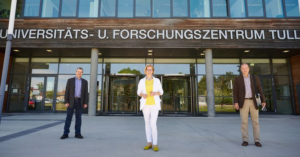
Am Eingang des UFT wird Landeshauptfrau Johanna Mikl-Leitner bereits von Univ.Prof. Joseph Strauss (BiMM-Koordinator und Departmentleiter für Angewandte Genetik und Zellbiologie, im Bild links) und von Univ. Prof. Georg Gübitz (Departmentleiter für Agrarbiotechnologie) in Empfang genommen. Treffen an Hochschulstandorten wie diese sind wichtig, bedeuten sie doch Rückenwind für die großen Pläne der Forscher*innen und Bestätigung für die Fördergeber, die mit ihrer Unterstützung hochwertige Ausbildungs- und Arbeitsplätze und in Folge Impulse für eine zukunftsweisende gesellschaftliche Entwicklung schaffen wollen.
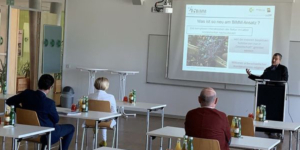
Die offene Forschungsplattform BiMM hat es sich zum Ziel gesetzt, mit innovativen molekulargenetischen Technologien neue bioaktive Naturstoffe und Enzyme aus Mikroorganismen (v.a. Pilze) zu finden. In Kooperation mit anderen Forschungsgruppen und der Industrie sollen diese dann charakterisiert und für den medizinischen bzw. agrar(bio)technologischen Einsatz weiterentwickelt werden. BiMM-Projektleiter Joseph Strauss erläutert in einer Kurzpräsentation die aktuellen Ergebnisse.
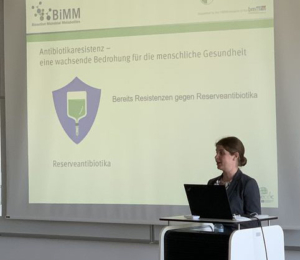
Dank BiMM können neue bioaktive Stoffe gefunden und ihre Wirkungsweise charakterisiert werden, die dann z.B. als Antibiotika, medizinische Wirkstoffe, Biokatalysatoren oder als Pflanzenschutzmittel in der Umweltbiotechnologie eingesetzt werden. „Neue Antibiotika zu finden ist wie die Suche nach einer Stecknadel im Heuhaufen. Die BiMM- Technologien ermöglicht und beschleunigt diese Suche. Daher leistet sie einen wichtigen Beitrag im Kampf gegen Antibiotikaresistenzen“, betont Kathrin Kober-Rychli (Projektleiterin BiMM, VetMed).

Ein besonderes Highlight: Die unglaubliche Reise durch das Innere eine Pilzzelle. Mithilfe einer Virtual-Reality-Brille wird LH Mikl-Leitner selbst zur Miniatur und findet sich in Mitten einer Pilzzelle wieder, umgeben von seltsamen Gebilden wie Vakuolen, Golgi, Mitochondrien oder Ribosomen. Die BOKU-Pilzforscher*innen um den Molekulargenetiker Joseph Strauss haben diesen beeindruckenden 3D-Film produziert – und setzen ihn jetzt sogar in der Lehre ein.
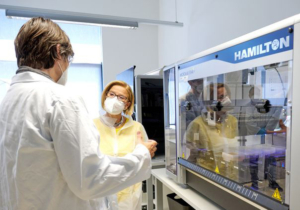
Im Roboterlabor: Dank Förderungen konnte die BiMM sowohl mit Geräten für Hochdurchsatz-Screenings ausgestattet werden als auch ein multidisziplinäres Forschungsteam aufbauen. BiMM-Scientist Christoph Schüller erklärt Johanna Mikl-Leitner vor Ort den Nutzen der Roboter.

Vanessa Scheffenacker (Studentin FH Tulln) und Roman Labuda (BiMM – VetMed) zeigen Johanna Mikl-Leitner den Arbeitsablauf.
Das Besondere an der BiMM ist, dass hier Know-How und Teamgeist aufeinandertreffen, sodass man wirklich das Gefühl hat, dass alle am selben Strang ziehen und gemeinsam ihr Herzblut in die Projekte fließen lassen. Die Begeisterung des Forschungsteams, das hier international beachtete Grundlagenforschung betreibt, übertrug sich auch auf die Fördergeber. So konnte eine 2. Förderperiode bis 2024 realisiert werden.
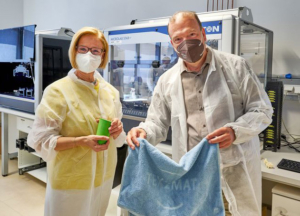
Bei einem weiteren Stop zeigt Georg Gübitz (Departmentleiter für Agrarbiotechnologie) der interessierten Landeshauptfrau ein Enzym-Modell von Bioplastik: „Für das Recycling von Plastik und Textilien haben Biokatalysatoren ein immenses Potential. Solche Enzyme – wie in diesem milliardenfach vergrößerten Modell – können Plastik unter umweltfreundlichen Bedingungen und hochspezifisch in die einzelnen Bausteine zerlegen.“ Für industrielle Anwendungen sollen nun noch effizientere Kandidaten aus der Natur isoliert werden. Dank BiMM können dabei viele Schritte automatisiert ablaufen.
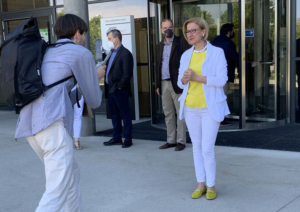
Beeindruckt verlässt Landeshauptfrau Johanna Mikl-Leitner das Universitäts- und Forschungszentrum Tulln: „Unsere Wissenschaftler*innen brauchen die besten Rahmenbedingungen. Nur dann ist es ihnen auch möglich, zu den besten Ergebnissen in der Forschung zu kommen – von denen vor allem die Menschen profitieren. Wer hätte vor einigen Jahrzehnten daran gedacht, dass die Forschung kleine Moleküle aufspürt, die die Gesundheit unseres Körpers verbessern können. Ich bin von diesen bahnbrechenden Erkenntnissen an der BOKU begeistert!“
(Bericht: Astrid Kleber-Klinger)
Mehr auch auf:
Core Facility Tulln leistet wichtige Beiträge zu gesellschaftlichen Herausforderungen
LH Mikl-Leitner: Forschung in Tulln kommt allen Menschen zu Gute
⇒ https://www.noe.gv.at/noe/Core_Facility_Tulln_leistet_wichtige_Beitraege_zu_gesells.html
Fotos: BOKU Öffentlichkeitsarbeit/Jakob Vegh (4), Maximilian Wolf (3), Astrid Kleber-Klinger (1)
BiMM at Austrian Television ORF
15.01.2021
Felix Novak, journalist at the ORF, visited us in Tulln and we were allowed to take him into the world of fungi…
Naturally Occurring Phenols Modulate Vegetative Growth and Deoxynivalenol Biosynthesis in Fusarium graminearum
10.01.2021
Safa Oufensou*, Virgilio Balmas, Emanuela Azara, Davide Fabbri, M. Antonietta Dettori, Christoph Schüller, Franz Zehetbauer, Joseph Strauss, Giovanna Delogu, and Quirico Migheli
ACS Omega 2020, 5, 45, 29407–29415
This paper reports a couple of natural substances from plants that repress the production of the main Fusarium mycotoxin DON but does not inhibit growth of the fungus. Application perspectives are open and we also will try to understand the underlying mechanisms.
High throughput screening for new fungal polyester hydrolyzing enzymes
20.03.2020
Simone Weinberger, Reinhard Beyer, Christoph Schüller, Joseph Strauss, Alessandro Pellis, Doris Ribitsch, Georg M. Guebitz
Austrian Centre of Industrial Biotechnology (ACIB), Austria,
Department of Agrobiotechnology, University of Natural Resources and Life Sciences, Austria,
Institute of Applied Genetics and Cell Biology, University of Natural Resources and Life Sciences Vienna, Austria
Journal: Frontiers in Microbiology
There is a strong need for novel and more efficient polyester hydrolyzing enzymes in order to enable the development of more environmentally friendly plastics recycling processes allowing the closure of the carbon cycle. In this work, a high throughput system on microplate scale was used to screen a high number of fungi for their ability to produce polyester-hydrolyzing enzymes. For induction of responsible enzymes, the fungi were cultivated in presence of aliphatic and aromatic polyesters (poly(1,4-butylene adipate co terephthalate) (PBAT), poly(lactic acid) (PLA) and poly(1,4-butylene succinate) (PBS)), and the esterase activity in the culture supernatants was compared to the culture supernatants of fungi grown without polymers. The results indicate that the esterase activity of the culture supernatants was induced in about 10% of the tested fungi when grown with polyesters in the medium, as indicated by increased activity (to >50 mU/mL) towards the small model substrate para-nitrophenylbutyrate (pNPB). Incubation of these 50 active culture supernatants with different polyesters (PBAT, PLA, PBS) led to hydrolysis of at least one of the polymers according to liquid chromatography-based quantification of the hydrolysis products terephthalic acid, lactic acid and succinic acid respectively. Interestingly, the specificities for the investigated polyesters varied among the supernatants of the different fungi.
⇒ https://www.frontiersin.org/articles/10.3389/fmicb.2020.00554/full
A New Opportunistic Pathogenic Fungus from Europe
25.06.2019
A new species, Saksenaea dorisiae (Mucoromycotina, Mucorales), isolated from a water sample originating from a private well in Manastirica-Petrovac in the Republic of Serbia (Europe), is described and illustrated.
The new taxon is well supported by multilocus phylogenetic analysis that included the internal transcribed spacer region (ITS), domains D1 and D2 of the 28S rRNA gene (LSU), and translation elongation factor-1α gene (tef-1α), and it is resolved in a clade withS. oblongispora and S. trapezispora. This fungus is characteristic by its moderately slow growth at 15 and 37°C, sparse rhizoids, conical-shaped sporangia and short-cylindrical sporangiospores. Saksenaea dorisiae is a member of the opportunistic pathogenic genus often involved in severe human and animal mucormycoses encountered in tropical and subtropical regions. Despite its sensitivity to several conventional antifungals (terbinafine and ciclopirox), the fungus can potentially evoke clinically challenging infections. This is the first novel taxon of the genus Saksenaea described from the moderately continental climate area of Europe.
For the following Paper we used the high throughput phenotyping capability of the BiMM equipment to screen more than 1300 clinical Candida isolates for drug sensitivity.
With robotic help Reinhard Beyer produced 1400 96-well plates with a concentration gradient of eight antifungals and generated and analyzed 140 000 growth curves.
16.01.2019
Antifungal susceptibility of yeast blood stream isolates collected during a 10 year period in Austria.
Beyer R, Spettel K, Zeller I, Lass-Flörl C, Achleitner D, Krause R, Apfalter P, Buzina W, Strauss J, Gregori C, Schüller C, Willinger B.
Mycoses 2019 Jan 12. doi: 10.1111/myc.12892. [Epub ahead of print]
PMID: 30636016
BACKGROUND:
Candida-associated infections put a significant burden on western health care systems. Development of (multi-) resistant fungi can become untreatable and threaten especially vulnerable target groups, such as the immunocompromised.
OBJECTIVES:
We assessed antifungal susceptibility and explored possible influence factors of clinical Candida isolates collected from Austrian hospitals between 2007 and 2016 METHODS: 1360 clinical Candida spp. isolated from blood cultures were subjected to antifungal susceptibility testing (AFST) in a liquid handling aided continuous microdilution assay. We tested against fluconazole, voriconazole, posaconazole, itraconazole, isavuconazole, anidulafungin, caspofungin and micafungin according to EUCAST with additional recording of growth curves. We performed rigid quality control on each assay via growth curve assessment and included two standard reference strains. Minimal inhibitory concentrations (MIC) were quantified according to EUCAST guideline E.DEF 7.3.1 and susceptibility was evaluated using EUCAST clinical breakpoints.
RESULTS:
The isolate collection consisted of C. albicans (59%), C. glabrata (19%), C. parapsilosis (9%), C. tropicalis (5%) and C. krusei (3%) and few other Candida species and fungi (5%). During the observed time period, species abundance as well as antifungal resistance rates remained constant. Multi-resistance was rare and we found no single isolate which was resistant to both azoles and echinocandins. Within the antifungal resistance profile of our strain collection, we observed clusters along species boundaries.
CONCLUSIONS:
Over the last decade, the distribution of Candida species and its level of antifungal resistance remained constant in Austria. Our data compares well with other European countries. Principal component analysis of the susceptibility profile of this collection revealed species-specific clusters and substantial intra-species variation, especially for C. glabrata.
We proudly present our new paper with contributions of the BiMM facility.
04.09.2018
Competition of Candida glabrata against Lactobacillus is Hog1 dependent.
Beyer R, Jandric Z, Zutz C, Gregori C, Willinger B, Jacobsen ID, Kovarik P, Strauss J, Schüller C.
Cell Microbiol. 2018 Aug 15:e12943. doi: 10.1111/cmi.12943. [Epub ahead of print]
PMID: 30112857
Candida glabrata is a common human fungal commensal and opportunistic pathogen. This fungus shows remarkable resilience as it can form recalcitrant biofilms on indwelling catheters, has intrinsic resistance against azole antifungals and is causing vulvo-vaginal candidiasis. As a nosocomial pathogen, it can cause life-threatening bloodstream infections in immune-compromised patients. Here, we investigate the potential role of the high osmolarity glycerol response (HOG) MAP kinase pathway for C. glabrata virulence. The C. glabrata MAP kinase CgHog1 becomes activated by a variety of environmental stress conditions such as osmotic stress, low pH and carboxylic acids and subsequently accumulates in the nucleus. We found that CgHog1 allows C. glabrata to persist within murine macrophages but it is not required for systemic infection in a mouse model. C. glabrata and Lactobacilli co-colonize mucosal surfaces. Lactic acid at a concentration produced by vaginal Lactobacillus spp. causes CgHog1 phosphorylation and accumulation in the nucleus. In addition, CgHog1 enables C. glabrata to tolerate different Lactobacillus spp. and their metabolites when grown in co-culture. Using a phenotypic diverse set of clinical C. glabrata isolates, we find that the HOG pathway is likely the main quantitative determinant of lactic acid stress resistance. Taken together, our data indicate that CgHog1 has an important role in the confrontation of C. glabrata with the common vaginal flora.
Articel describing new species from Donau and two new combinations has been accepted for publication in journal Nova Hedwigia
Mai 2018
„Metapochonia lutea, a new species isolated from the Danube river in Austria“
A new species Metapochonia lutea (Ascomycota, Hypocreales) is described and illustrated. This fungus differs from the other taxa in the genus Metapochonia by its production of intensive yellow pigment in culture, conidiophores with relatively complex verticillate branching, bean-shaped conidia, and by delayed development of one-celled and prominent thick-walled submerged chlamydospores usually in chains or irregular clusters of 3-5 cells. The new taxon is well supported by phylogenetic analysis of the internal transcribed spacer region (ITS) and translation elongation factor-1α gene (TEF-1α). Two new combinations are proposed for Pochonia parasitica and Pochonia cordycepisociata, as both species are resolved in a phylogenetic clade with other Metapochonia species.
Roman Labuda (1)*, Andreas Bernreiter (2), Christoph Schüller (1), Alena Kubátová (3), Roland Hellinger (4) & Joseph Strauss (2)
1 University of Veterinary Medicine (VetMed), Bioactive Microbial Metabolites group (BiMM), University and Research Center (UFT) – Campus Tulln,
Konrad Lorenz Strasse 24, 3430 Tulln a.d. Donau, Austria
*Corresponding author. Email: roman.labuda@vetmeduni.ac.at
2 Department of Applied Genetics and Cell Biology, University of Natural Resources and Life Sciences, Vienna (BOKU); Konrad Lorenz Strasse 24, 3430 Tulln a.d. Donau, Austria
3 Charles University, Faculty of Science, Department of Botany, Culture Collection of Fungi (CCF),
Benátská 2, 128 01 Prague 2, Czech Republic
4 Department of Agrobiotechnology, Center for Analytical Chemistry, University of Natural Resources and Life Sciences, Vienna (BOKU); Konrad Lorenz Strasse 20, 3430 Tulln a.d. Donau, Austria
Flash Chromatography Machine installed at BiMM
March 2018
puriFlash 450 system
A State of the Art machine puriFlash 450 is in place from now on for our
large number of purifications.
Talk and poster at Final Scientific Conference of ImResFun
09.2017
The BiMM robots alow efficient high throughput analysis of growth phenotypes. We investigated growth under diverse conditions of 240 C. glabrata strains originating from the Vienna General Hospital. The results were presented at the Final Scientific Conference of ImResFun.
Talk and poster with the title:
The broad and malleable phenotypic space of clinical Candida glabrata strains. A high throughput mapping of phenotypes reveals highly individualistic adaptations to a fluctuating environment.
Candida glabrata is a successful commensal and able to adapt to a variety of environmental situations and a cause of vulvo-vaginal candidiasis and shows high resistance to azole antifungals. To explore how this flexibility is possible, we investigated the phenotypic variation of several hundred C.glabrata clinical isolates collected by the Vienna General Hospital. Our quantitative high-throughput determination of growth parameters revealed a broad variation of phenotypes. For example temperature influenced growth rate in an unexpected range. We found that many strains tolerated either higher or lower temperatures while all strains had a temperature optimum at around 39°C. The collection was also scored for resistance to low pH, weak acid, osmotic stress, carbon source utilization and resistance to antifungals. Interestingly, the population spread for heat stress resistance while it remained confined for osmitic stress. This argues for the polygenetic basis of heat stress versus only few key processes contribute to osmotic stress.
Furthermore, about 15% of these strains are efficiently forming biofilms. We further investigated the stability of some phenotypes. We tried
to manipulate fluconazole resistance by adapting sensitive strains to intermediate fluconazole concentrations. This succeeded but lead to a simultaneous post-adaption loss of growth rate on rich medium, indicating that adaptation to fluconazole comes at a cost. Genome sequencing of selected phenotypically eye-catching strains revealed that their genomic profiles differed in up to 105 bases making specific assignments difficult.
For stress resistance we analyzed the general role of CgHog1 and found a widely differing spectrum of basal Hog1 phosphorylation and stress response rates. The overall change of CgHog1 phosphorylation correlated with stress resistance of the particular strains. We conclude that these C. glabrata clinical isolates exhibit a broad phenotypic spectrum. Further investigation of the genetic and epigenetic basis of these variations and their stability are required to understand the success of C. glabrata as an opportunistic commensal.
contributing authors:
Christoph Schüller, Reinhard Beyer, Birgit Willinger, Joseph Strauss
1 Universität für Bodenkultur, Konrad Lorenz Strasse 24, Tulln a.d.
Donau 3430, Austria
2 Medizinische Universität Wien, Klinische Abteilung für Klinische
Mikrobiologie Währinger Gürtel 18-20, Wien
⇒ ImResFun: http://imresfun.cdl.univie.ac.at/finalmeeting/index.php
Publikation: Butyrate influences intracellular levels of adenine and adenine derivatives in the fungus Penicillium restrictum
04.2017
Zutz C, Chiang YM, Faehnrich B, Bacher M, Hellinger R, Kluger B, Wagner M, Strauss J, Rychli K (2017)
Microbiol Res. 2017 Apr;197:1-8. doi: 10.1016/j.micres.2016.12.013. Epub 2017 Jan 11.
Butyrate, a small fatty acid, has an important role in the colon of ruminants and mammalians including the inhibition of inflammation and the regulation of cell proliferation. There is also growing evidence that butyrate is influencing the histone structure in mammalian cells by inhibition of histone deacetylation. Butyrate shows furthermore an antimicrobial activity against fungi, yeast and bacteria, which is linked to its toxicity at a high concentration.
⇒ http://dx.doi.org/10.1016/j.micres.2016.12.013
BiMM Poster Presentation at ÖGMBT Annual Meeting
12.-14.09.2016
8th ÖGMBT Annual Meeting – Life Sciences for the Next Generation – 2016, Graz, Austria.
Poster Title: The open research platform „BiMM -Bioactive microbial metabolites“ – a high-throughput biotic and chemical interaction approach to discover novel bioactive compounds
Abstract: Novel metabolic products are needed for health and biotechnology. Production of metabolites of axenic cultures has been exploited in the last decades. More recently, it has been realized that interactions of microorganisms can lead to production of dormant enzyme activities and even the exchange of metabolites between organisms can occur. Thus co-culture of microorganisms leads to a multitude of new biosynthetic possibilities. Moreover, mass sequencing results of microbial genomes predict a much richer diversity of microbial metabolites than previously anticipated. The exploitation of the potential of this microbial genetic dark matter has recently moved again into focus. Here we report on our approach to discover and characterize bioactive compounds and enzymes. We are using a variety of environmental and chemical conditions in which biotic interactions between different microbial genera trigger production of novel metabolites. Bioactivity testing of produced metabolites, enzymes, effectors and other compounds is performed in a high-throughput format using automated liquid and solid handling systems. Possible hits are followed up and characterized using a metabolomics platform developed at the Center for Analytical Chemistry. We have screened in a pilot study approximately 15k co-cultures of different bacteria and fungi combinations. Among these we identified about 30 interactions producing extracts with antibacterial and antifungal activity. Identification of the compounds responsible activity is under way.
The newly created HTP infrastructure is designed as open research platform providing hardware and expertise for dedicated collaborative projects in the field of innovative bioactive metabolite and enzyme production and characterization of their properties and function.
Authors:
Christoph Zutz 1, Christoph Schüller 2, Roland Hellinger 3, Kathrin Rychli 1, Martin Wagner 1, Rainer Schumacher 3, Scot Wallace 2, Joseph Strauss 2
Affiliation:
1 Institute of Milk Hygiene, Milk Technology and Food Science, VETMED
2 Department of Applied Genetics and Cell Biology, BOKU
3 Center for Analytical Chemistry, BOKU
Publikation: Valproic Acid Induces Antimicrobial Compound Production in Doratomyces microspores
13.04.2016
Zutz, C., Bacher, M., Parich, A., Kluger, B., Gacek-Matthews, A., Schuhmacher, R., … Strauss, J. (2016). Valproic Acid Induces Antimicrobial Compound Production in Doratomyces microspores. Frontiers in Microbiology, 7, 510.
One of the biggest challenges in public health is the rising number of antibiotic resistant pathogens and the lack of novel antibiotics. In recent years there is a rising focus on fungi as sources of antimicrobial compounds due to their ability to produce a large variety of bioactive compounds and the observation that virtually every fungus may still contain yet unknown so called “cryptic,” often silenced, compounds.
⇒ http://journal.frontiersin.org/article/10.3389/fmicb.2016.00510/full